Slope engineering in Northampton encompasses the assessment, design, and remediation of natural and man-made inclines to ensure long-term stability and safety. This category covers everything from initial ground investigation and slope stability analysis through to the implementation of retention systems and drainage measures. With the town's expansion into areas of more pronounced topography, particularly along the Nene Valley and its tributary valleys, the demand for robust slope solutions has never been greater. Whether for new housing developments on former industrial land or infrastructure projects cutting through glacial deposits, understanding slope behaviour is critical to preventing landslides, erosion, and costly structural failures.
Northampton sits predominantly on Jurassic and Quaternary geology, with the Northampton Sand Formation and underlying Lias Clay being particularly relevant to slope performance. The iron-rich sandstone of the Northampton Sand can present variable strength characteristics, while the Lower Lias Clay is notorious for its shrink-swell potential and low shear strength when wet. Overlying glacial till and head deposits, common across the county, add further complexity with their heterogeneous composition of sands, gravels, and boulder clay. These geological conditions, combined with the region's moderate rainfall and occasional intense storm events, create a landscape where pore water pressure management and material selection are paramount in any slope design.
All slope works in the UK must comply with the requirements of Eurocode 7 (BS EN 1997) for geotechnical design, which mandates a limit state approach considering both ultimate and serviceability conditions. In Northampton, this is supplemented by the National House Building Council (NHBC) Standards for residential developments on sloping sites, and the Design Manual for Roads and Bridges (DMRB) for highway-related slope works. Planning authorities typically require detailed geotechnical assessments as part of the planning application process, with slope stability reports needing to demonstrate factors of safety against failure under both drained and undrained conditions. The Construction (Design and Management) Regulations 2015 also place duties on designers to eliminate foreseeable risks, making thorough analysis non-negotiable.
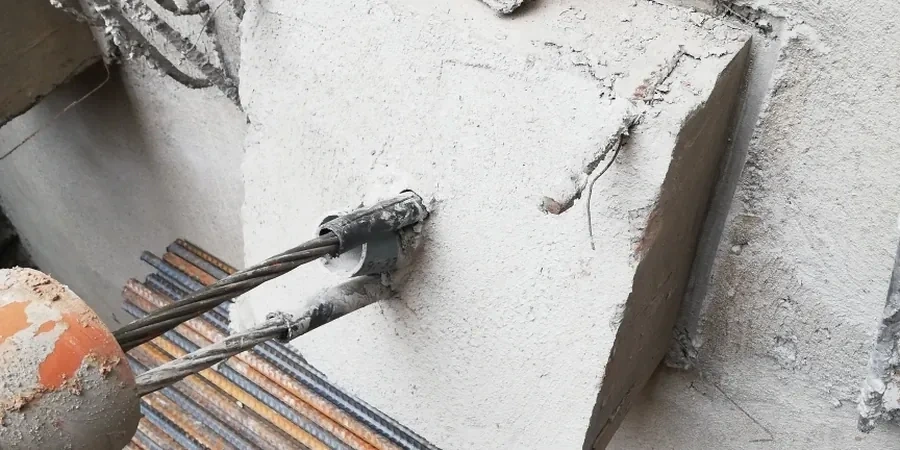
The types of projects requiring specialist slope input are diverse across Northampton. Residential developers frequently encounter steep gardens and embankment failures in established neighbourhoods like Kingsthorpe and Abington, while commercial projects along the Brackmills Industrial Estate often need retaining wall design to maximise usable floor space on sloping plots. Infrastructure schemes, including the ongoing dualling of the A45 and railway corridor improvements, demand advanced active/passive anchor design for cutting stabilisation and bridge abutment support. Historical quarry faces and former ironstone workings also present legacy slope hazards requiring remediation, particularly where they interface with public rights of way or new development boundaries.
Quick answers
What are the main causes of slope instability in Northampton?
The primary triggers include prolonged or intense rainfall increasing pore water pressure in granular and clay soils, undercutting by river erosion along the Nene Valley, and human activities such as excavation or poorly compacted fill. The presence of Lias Clay, which loses strength when saturated, and variable groundwater levels in the Northampton Sand Formation are significant local geological contributors to instability.
When is a slope stability analysis required for a development?
A slope stability analysis is typically required when a development proposes cuts or fills greater than 1.5 metres, is located near the crest or toe of an existing slope, or where historical instability is evident. Planning authorities in Northampton will condition geotechnical assessments for any site with gradients steeper than 1 in 6, particularly where the development could affect neighbouring land or public infrastructure.
What regulations govern retaining wall construction on slopes in the UK?
Retaining walls on slopes must comply with Eurocode 7 (BS EN 1997) and the associated UK National Annex, which sets partial factors for design. For highway schemes, the DMRB applies, while residential projects follow NHBC Standards Chapter 4.2. Building Regulations Part A also requires walls to safely sustain all anticipated loads, including earth pressures from the retained slope, without excessive deformation.
How long does a typical slope remediation project take from investigation to completion?
Timelines vary considerably based on scale and complexity, but a typical slope remediation project in Northampton might span 3 to 6 months. This includes 4 to 6 weeks for ground investigation and laboratory testing, 2 to 4 weeks for design and analysis, and a construction phase that is heavily weather-dependent, with earthworks often programmed between April and October to minimise the risk of working on saturated ground.