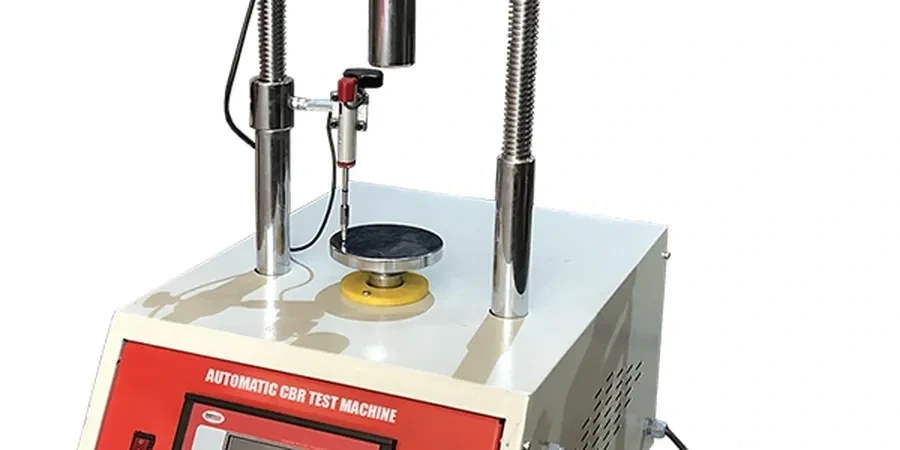
A warehouse expansion off the A45 near Brackmills was delayed by three weeks last spring. The reason wasn't the steel frame or the cladding. It was the subgrade. The contractor skipped the CBR test, assumed a 5% value, and the pavement failed under construction traffic. In Northampton, where the Northampton Sand Formation ironstone meets glacial till and Lias Clay, subgrade strength changes radically over short distances. The laboratory CBR test removes that guesswork. We run the test to BS 5930 procedures on remoulded samples at optimum moisture content, delivering soaked and unsoaked values that feed directly into your flexible pavement design. A single test costs less than a day of machine downtime.
A soaked CBR value below 2% means the subgrade cannot support construction traffic without capping layer reinforcement.
Process overview
Local context
Northampton's expansion from a market town into a logistics hub has pushed development onto marginal land. The floodplains of the River Nene conceal alluvial silts and peaty lenses with CBR values below 1%. The Northampton Sand Formation, while stronger, weathers rapidly when exposed, creating a variable subgrade profile that tricks the inexperienced eye. A design CBR of 5% used across an entire industrial estate off the A43 can mask pockets of 1.5% material that will rut within the first year of trafficking. The soaked laboratory CBR test exposes these weak zones before the asphalt goes down. It gives the pavement engineer the number needed to specify the capping layer thickness from the Design Manual for Roads and Bridges.
Visual overview
Relevant standards
BS 1377-4:1990, BS 5930, Eurocode 7 (BS EN 1997), Design Manual for Roads and Bridges (DMRB)
Additional services
Soaked CBR Test
96-hour submerged test per BS 1377-4. Essential for subgrades in Northampton's low-lying areas where winter water table rise saturates the formation.
Unsoaked CBR Test
Immediate bearing ratio determination for sites with deep drainage and free-draining subgrades, such as developments on the Northampton Sand outcrops.
Typical parameters
Top questions
How much does a laboratory CBR test cost in Northampton?
A single-point laboratory CBR test in Northampton typically costs between £110 and £150, depending on whether you need the soaked or unsoaked procedure. We recommend running at least three points per site to capture subgrade variability.
How long does the soaked CBR test take?
The compaction and setup take one day. Then the specimen soaks for 96 hours. The penetration test and reporting add another day. Plan for six working days from sample delivery to report.
What CBR value is needed for a residential road in Northampton?
A design CBR of 5% is typical for residential access roads, but Northampton sites on Lias Clay often test lower. If the soaked CBR comes back at 2% or less, the pavement design will need a capping layer per DMRB specifications.